
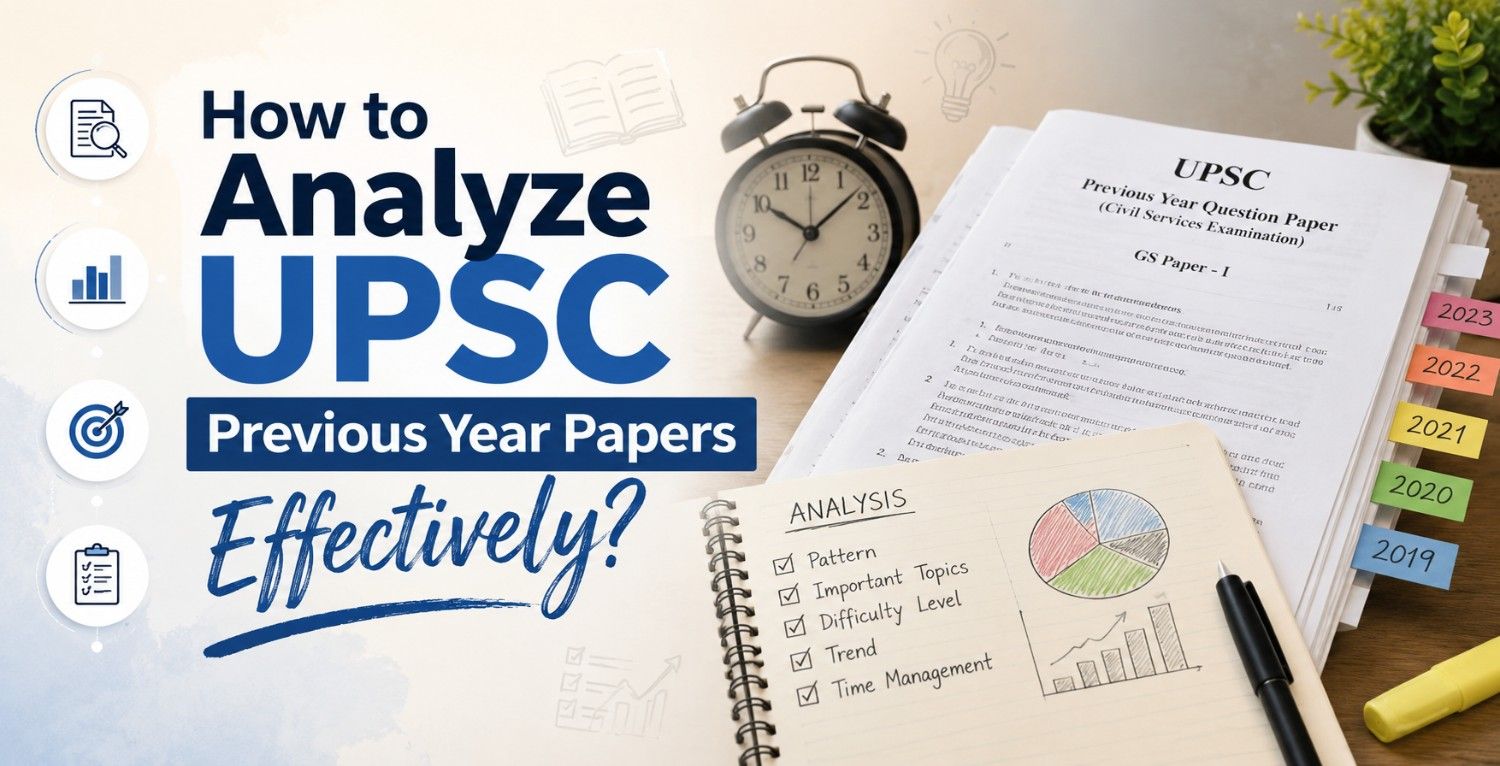
Aspirants burn the midnight oil to ensure they crack the UPSC exam with excellent ranks. One of the most effective ways to achieve desired ranks in the UPSC exam is by analyzing the UPSC previous year papers. They help aspirants identify important topics, recurring themes, exam trends and the level of depth expected in the examination. Many aspirants solve UPSC previous year papers only for practice, but the real benefit comes from analyzing them strategically. They help expose the examiner’s mindset, reveal high yield themes and define the boundaries of the syllabus.
To analyze UPSC previous year papers, aspirants should group questions by theme, decode the directive keywords, research all four options presented as answers. Its understand the examiner’s mindset, identify micro themes, and spot how incorrect statements are engineered as traps to confuse candidates. Many aspirants enrolled in UPSC Coaching in Delhi use this approach to strengthen their preparation. Analyzing UPSC previous year questions helps understand which topics are relevant from the Mains examination perspective, how the examiner thinks, and how to frame well-structured, high-scoring answers.
What is UPSC Exam?
The UPSC Exam is a prestigious national-level competitive examination conducted by the Union Public Service Commission to recruit candidates for various civil services in India. It consists of Preliminary, Main, and Interview stages. Successful candidates are appointed to services such as IAS, Indian Police Service, IFS, and other government positions. The exam recruits aspirants for roughly 24 elite governmental branches that manage Indian administration, public safety and international policy.
How to Analyze UPSC Previous Year Papers [5 Effective Tips]
To analyze UPSC previous year papers, aspirants should research all four options, identify micro themes, group topics by theme and decode directive keywords. Analyzing IAS previous year papers helps identify important topics, recurring themes, and question patterns. This approach improves UPSC preparation strategy, enhances revision, and boosts exam performance effectively. Let’s understand how to analyze UPSC previous year papers effectively:-
1. Group by Theme, Not Just Year
Aspirants should not solve UPSC previous year papers sequentially from 2018 to 2026. Instead they should group them subject-wise and by theme. For example, Polity can be broken down to parliament and legislative functions.
2. Research all Four Options
It is advised that aspirants research all four options in the question. If a question asks about a specific national park, aspirants should look into the other three choices mentioned. UPSC frequently turns unselected options into core questions in subsequent years.
3. Identify Micro Themes
Aspirants should identify micro themes in the UPSC previous year papers that keep repeating. For example, the Economy consistently targets Monetary Policy. The Polity targets Fundamental Rights & Judiciary, and the Environment targets protected areas.
4. Deconstruct the Traps
Aspirants should deconstruct the traps in the UPSC exam. They should track how the facts are modified in the exam. One should note where the examiners switch ministries, invert data points, or inject extreme words like only, all and never to spot how incorrect statements are engineered.
5. Decode Directive Keywords
To attempt the questions correctly, aspirants should decode the directive keywords in the UPSC previous year papers. ‘Critically Examine’ requires a balanced evaluation of pros and cons. Also, ‘elucidate ‘asks to clarify a concept with real-world examples.
How to Download UPSC Previous Year Question Papers?
UPSC previous year questions can be downloaded easily from the official UPSC website. These UPSC Previous Year Question Papers help candidates understand the exam pattern, question trends, and difficulty level. Visit the UPSC examination section, select the relevant exam, and download the PDF files for your preparation. Regular practice improves accuracy, confidence, and time management skills.
Here are the key steps to download UPSC previous year question papers:-
- Visit the official UPSC website.
- Navigate to the “Examinations” section.
- Click on “Previous Question Papers.”
- Select the desired examination and year.
- Download and save the PDF for practice.
What is the Significance of UPSC Previous Year Papers?
Analyzing the UPSC previous year papers hasmany significance, such as defining the boundaries of the syllabus and revealing high-yield themes. Its Exposing the examiner’s mindset, directing current affairs reading and standardizing evaluation matrix. Let’s understand the significance of UPSC previous year papers:-
1. Defines the Boundaries of Syllabus
The UPSC syllabus uses broad headlines such as the Indian Economy or Modern History. The UPSC previous year papers pinpoint exactly what depth is require along with defining the boundaries of the UPSC syllabus.
2. Reveals High Yield Themes
In Mains, themes such as the Governor’s role, Urbanisation challenges, Inclusive Growth, and disaster management mechanisms are high yield themes. Analyzing the upsc exam previous year question paper helps to prioritise these high yield themes.
3. Exposes the Examiner’s Mindset
Studying the UPSC cse previous year papers help to crack the examiner’s mindset. In Mains, these papers teach aspirants the difference between what the examiner expects. They use keywords, such as Discuss, Critically Evaluate, Elucidate and Examine.
4. Directs Current Affairs Reading
Thousands of news items float around daily but not all are relevant from Mains point of views. Analyzing the UPSC previous year papers teach aspirants how UPSC blends current events with static topics.
5. Standardizes Evaluation Matrix
Analyzing the UPSC previous year papers standardizes the evaluation matrix. Test series from Top 10 UPSC Coaching Institutes in Delhi can sometimes be poorly frame, overly factual and unrealistically difficult. UPSC exam previous year papers are the utmost guiding tool to measure the actual preparation level.
Conclusion
The upsc previous year question paper help a lot to achieve desired rank in the Mains examination. It defines the boundaries of the syllabus, reveals high yield themes, exposes the examiner’s mindset, directs current affair’s reading and standardizes evaluation matrix. To analyze the UPSC previous year papers, aspirants should group topics by theme, research all four options given in the question, identify micro themes, deconstruct the traps and decode directive keywords.